THE 24 HOURS OF LE MANS CLOCK
Ten years. Ten races. One clock.
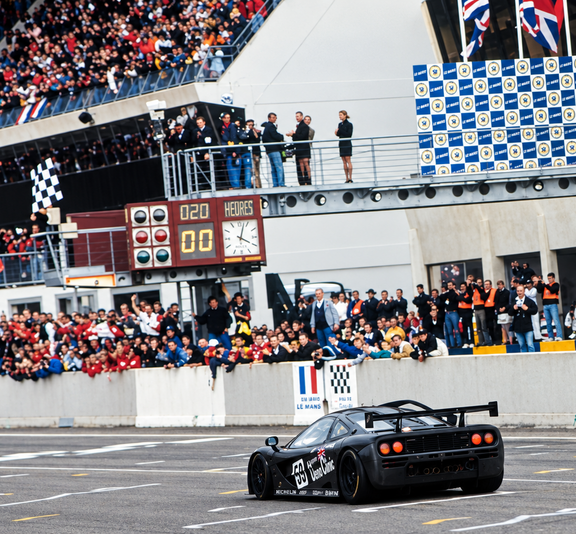
For a decade, this clock stood above one of motorsport’s most celebrated stages. At the Circuit de la Sarthe, the 24 Hours of Le Mans is ultimately measured by something no driver, team or manufacturer can control: time. From 1991 through 2000, it marked the passage of Mazda, Peugeot, Porsche, McLaren, BMW and Audi. Different eras, technologies and approaches to winning the world’s greatest endurance race. All raced against the same clock.
1991–2000
A DECADE AT LE MANS
Ten editions of the 24 Hours passed beneath the clock.
- 1991
Mazda 787B
Johnny Herbert · Volker Weidler · Bertrand Gachot
- 1992
Peugeot 905
Derek Warwick · Yannick Dalmas · Mark Blundell
- 1993
Peugeot 905
Geoff Brabham · Éric Hélary · Christophe Bouchut
- 1994
Dauer-Porsche 962 Le Mans
Yannick Dalmas · Hurley Haywood · Mauro Baldi
- 1995
McLaren F1 GTR
Yannick Dalmas · J.J. Lehto · Masanori Sekiya
- 1996
TWR Porsche WSC-95
Davy Jones · Manuel Reuter · Alexander Wurz
- 1997
TWR Porsche WSC-95
Michele Alboreto · Stefan Johansson · Tom Kristensen
- 1998
Porsche 911 GT1-98
Laurent Aïello · Allan McNish · Stéphane Ortelli
- 1999
BMW V12 LMR
Joachim Winkelhock · Pierluigi Martini · Yannick Dalmas
- 2000
Audi R8
Frank Biela · Tom Kristensen · Emanuele Pirro
Six marques. Ten races. A decade stretching from the final years of Group C to the emergence of a new generation of Le Mans machinery.
The 24 Hours of Le Mans Scoring Clock - Plus 2001 (The 11th Year)
The 24 Hours of Le Mans Clock
Time, made physical.
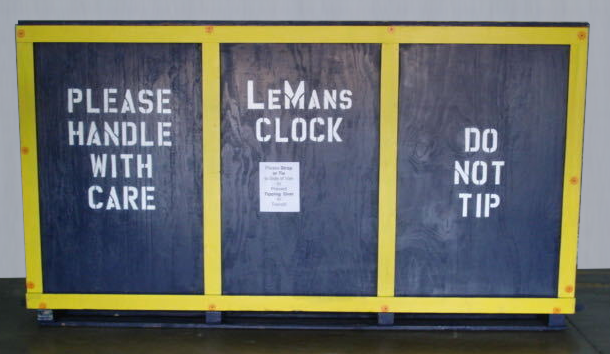
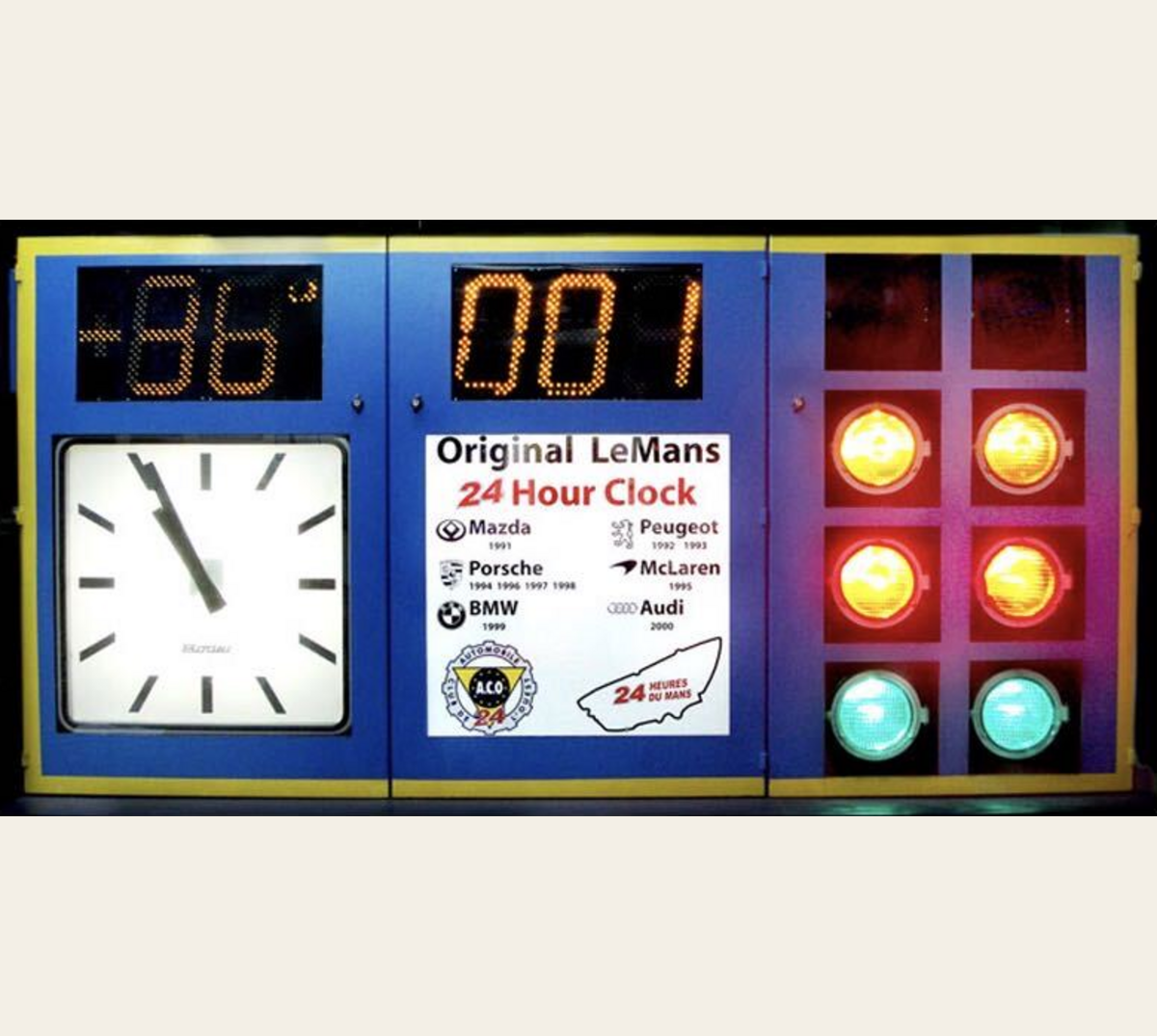
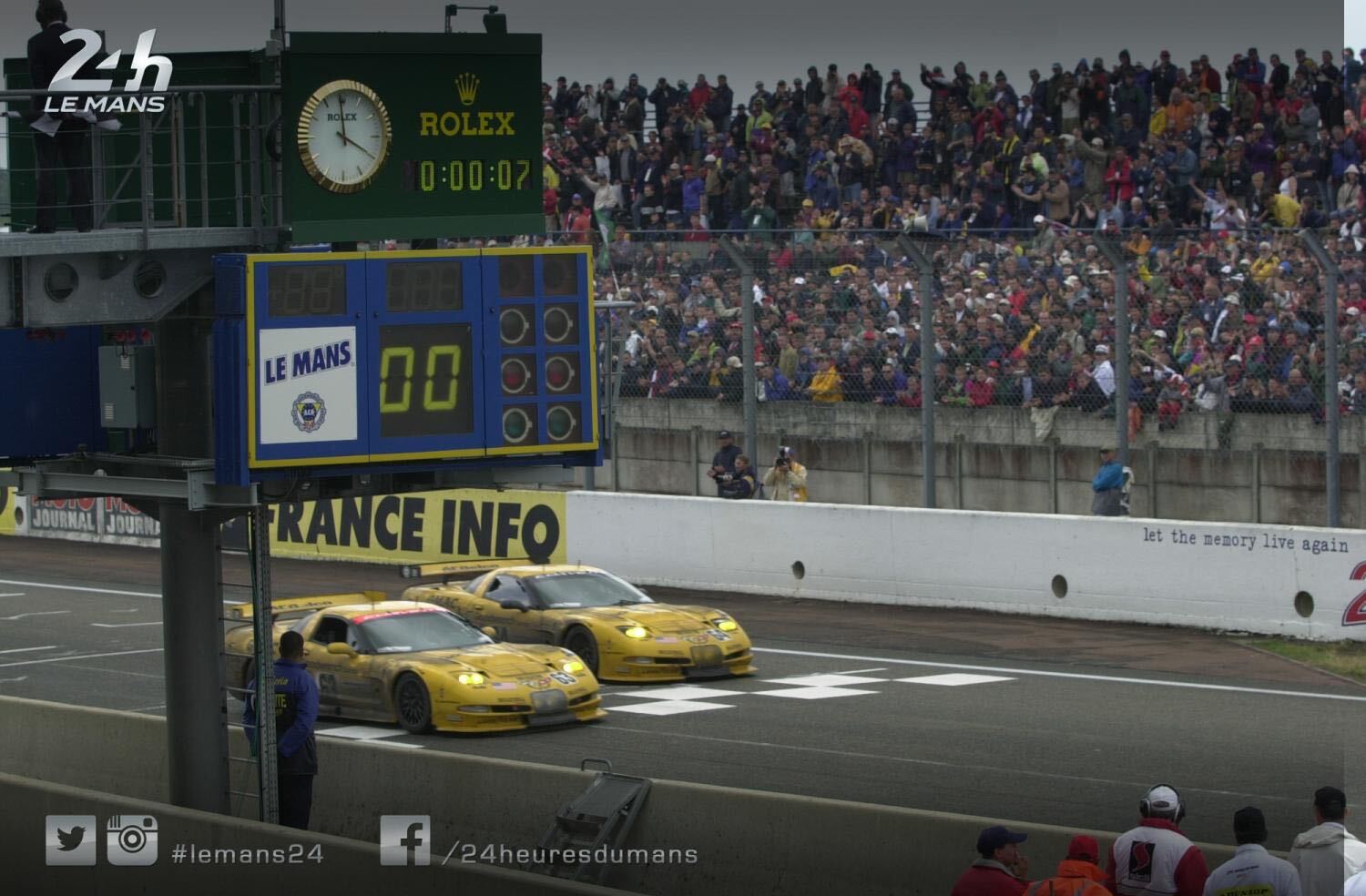
The second most famous clock in the world, was not created to commemorate a race. It was part of the race. Installed within the Le Mans timing and race-control infrastructure, its square analog face stood prominently above the circuit alongside digital displays and track-control signal lights. Below it, competitors faced thousands of gear changes, hundreds of laps, pit stops measured in seconds and an entire night racing at speed. Above them, time continued uninterrupted. Today, the surviving installation, including its analog clock, digital display elements, signal lights and original transport enclosure, provides a tangible connection to that period of Le Mans history.
The ONLY 24 Hours of Le Mans Clock, in private hands, anywhere in the WORLD.
1991–2000
THE 24 HOURS OF LE MANS CLOCK
For ten years, some of the greatest racing cars of their generation passed beneath it.
Mazda 787B · Peugeot 905 · Dauer-Porsche 962 · McLaren F1 GTR Porsche WSC-95 · Porsche 911 GT1 · BMW V12 LMR · Audi R8
Their victories now belong to history.
The 24 hours of Le Mans clock that measured them remains. The ONLY one.